Development Finance International


22-23 May - Debt Management Facility Stakeholders’ Forum, Vienna, Austria
 DRI participated in the World Bank Debt Management Facility Stakeholder Forum in Vienna, taking part in the ICG governance meeting of the facility, and making a presentation on Debt Sustainability Status and Prospects in the Forum itself. The presentation, reported on the uses by countries of the LIC DSF template, on debt sustainability issues and reviewed the main conclusion of a study undertaken by DRI for DFID and the AfDB.
2 May - The pitfalls of Doing Business
 An article published on the Interpress News Service Agency delves into the details of the World Bank’s Doing Business in an attempt to lift the veil on what underpins the ranking and reveal its pitfalls.
The authors find, among other things, that countries promoting lower corporate tax and more exemptions are ranked more favourably than others, therefore encouraging harmful tax competition among developing countries. They call for the World Bank to focus efforts on assisting developing countries in improve tax administration to enhance collection and compliance, and to reduce evasion and avoidance.
20 April - Finance Ministers from Francophone LICs Meet in Washington
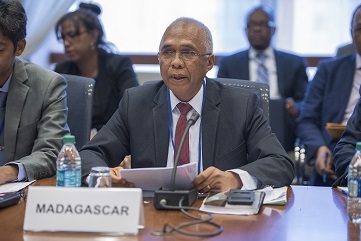 For the past seven years, finance ministers from low-income Francophone countries have met in the margins of the Annual Meetings of the IMF and the World Bank to discuss financing for development. Under the aegis of the International Organization of La Francophonie (OIF), DFI helped convene the latest meeting in Washington on 20th April.
28 February - The Danger of PPPs: the UK’s Experience
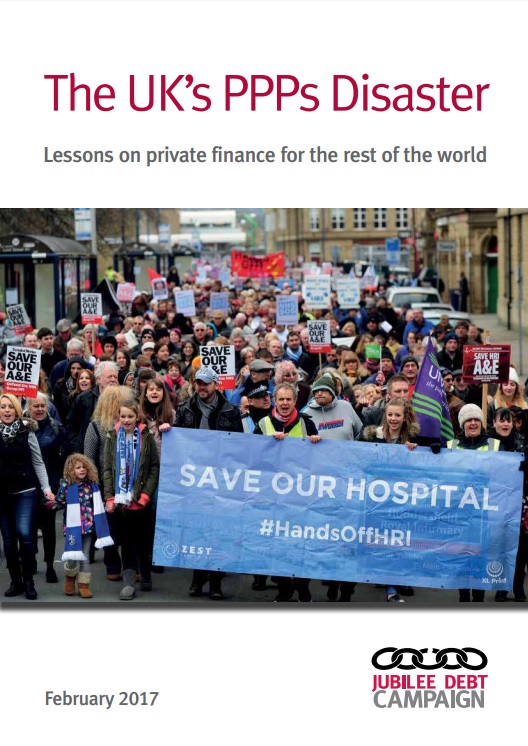 A new briefing by the Jubilee Debt Campaign (UK) focuses on the failures of PPPs in the UK. Aimed at an international audience to inform civil society and decision makers across the world, “The UK’ PPPs Disaster: Lessons on Private Finance for the Rest of the World” sets the record straight about the true record of PPPs in the UK, by revealing the shortcomings of what is an unpopular financing mechanism.
27 February - Spotlight on Blended Finance
 In a report co-published with Oxfam International, Eurodad focuses its new piece of research on blended finance. Combining official development assistance (ODA) with other private or public resources, in order to ‘leverage’ additional funds from other actors, “blended” finance has become a common development finance term over the last few years.
However, there is a level of confusion around the way this development finance mechanism operates, coupled with a relative lack of data from blending projects. With an aim to shed light on this concept, the report clarifies what blending is, how it works and how it is used. It identifies areas that are crucial to maximize the development impact of blending projects, while providing an assessment of the associated quantitative and qualitative risks.